Assure
Assure the site live. Stop rebuilding evidence before every audit.
Assurance is what the site owes three audiences at once: the Department (compliance), the Council (governance) and the parent community (trust). The sector currently rebuilds all three from folders and emails, every audit, every term. Assure holds the four things the site actually does to stay safe (who owns what, what the risks are, how camps run, and what happened when it happened) in one chain that is current by design.
One dataset. Three audiences. No second form.
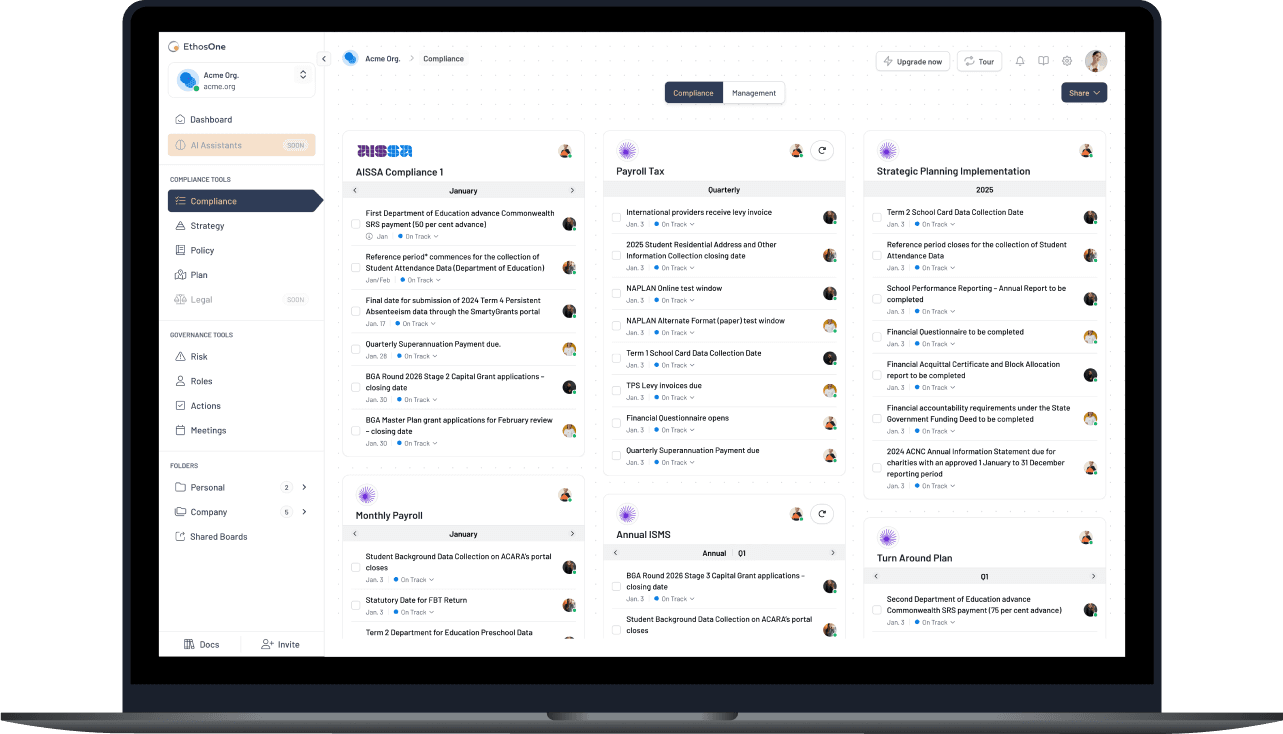
Promise 1 of 3
Weeks of evidence-chasing before every audit. Held by the person, not the tool.
Audit preparation, risk summaries and incident evidence are rebuilt from folders and emails every time someone asks. The evidence is current only on review day. The chain breaks when staff change roles. The Business Manager carries weeks of chasing work that should not exist. And when the critical incident arrives, the record that protects the Principal is scattered across four drives.
Promise 2 of 3
Four capabilities. One assurance layer. One dataset, three audiences.
Assure is organised around the four things the sector actually has to show: who is accountable, what the risks are, how camps and excursions run, and what happened when things happened. Each capability below is a working artefact inside Assure, distilled from the product documentation for assign-roles, risk-assessments, camps-excursions and assurance-logs.
Promise 3 of 3
Assure is live at a site in 14 days.
Day 1: roles, risks and camps scoping.
Research anchor
The difference between proof of intent and proof of execution is the difference between a policy library and a working assurance rail. Only one keeps a Coroner from asking whether the school actually did the thing.
What Assure changes
Assurance that holds up under scrutiny.
- Department, Council, parent community, served by the same surface
- 3 audiences
- No evidence assembled the night before a review
- 0 rebuilds
- From first call to a live compliance calendar
- 14 days
One assurance rail. Three legitimate scopes, scoped automatically.
Evidence is attached where the work happens. Not in a SharePoint rebuild.
Your current obligations, your current risks. Held as a lifecycle.
Weeks of evidence-chasing before every audit. Held by the person, not the tool.
Audit preparation, risk summaries and incident evidence are rebuilt from folders and emails every time someone asks. The evidence is current only on review day. The chain breaks when staff change roles. The Business Manager carries weeks of chasing work that should not exist. And when the critical incident arrives, the record that protects the Principal is scattered across four drives.
Assure replaces the ad-hoc rebuild with one evidence layer that is current by design: roles assigned, risks assessed, camps run to protocol, and logs captured from the same site data, continuously.
- Audit preparation takes weeks of evidence chasing.
- Risk registers are current only on review day.
- Role assignments live in the Business Manager's head.
- Camp and excursion paperwork is rebuilt every term.
The Shift
When roles, risks, camps and logs share one chain, assurance stops being a rebuild and starts being a read.
Four capabilities. One assurance layer. One dataset, three audiences.
Assure is organised around the four things the sector actually has to show: who is accountable, what the risks are, how camps and excursions run, and what happened when things happened. Each capability below is a working artefact inside Assure, distilled from the product documentation for assign-roles, risk-assessments, camps-excursions and assurance-logs.
Assign Roles
The accountability register: who is trained, who is assigned, who is current, who is covering.
From the assign-roles product doc. A school's assurance posture is not the policy. It is the set of humans who currently hold it. Assure holds the role register live: first-aid, fire warden, child-protection contact, bus supervisor, science-lab supervisor, evacuation coordinator. Each role has a named holder, a training due date, a refresh cadence and a covering deputy. When a staff member is away, cover is visible before the yard opens. When a Department audit asks who is trained in what, the answer is already on the screen.
| Role | Holder | Training | Status | Cover |
|---|---|---|---|---|
First-aid lead (primary)HLTAID012; refresh 3-yearly. | Alison R. | Expires Jun 26 | Current | Priya N. |
Child-protection contactMandatory per Federal CSS §3. | Principal | Refresh annually | Due Wk 4 | Deputy |
Fire warden, west wingEvacuation plan v3.2. | Mark T. | Mar 26 | Current | Sarah P. |
Science lab supervisorChemical store key holder. | Unfilled | n/a | Gap | None |
Bus supervisor (OSHC pickup)Licence and WWCC. | Jordan L. | Oct 26 | Current | Aria W. |
From product doc 17-assign-roles.md. The gap row is the one Assure is designed to catch: before the audit, before the incident, before the Principal has to answer for it.
Risk Assessments
The 5 × 5 register: ISO 31000 aligned, residual-risk visible, controls owned.
From the risk-assessments product doc. Risk in a public school is not a document. It is a position on a heat-map that moves as controls are added or lost. Assure holds the ISO 31000 register as a live 5 × 5 matrix (likelihood down, consequence across) with each risk placed on the residual-risk grid. Treatments are owned, evidenced and reviewed. When a new risk appears (a broken crossing, a new contractor, a pattern of incidents), it enters the matrix visibly. When a treatment closes, the dot moves toward green.
Consequence
From product doc 12-risk-assessments.md. ISO 31000 aligned. Each dot drills to the treatments, their owners and the evidence that moved the position.
Camps and Excursions
Camp lifecycle as a timeline (from proposal to debrief) with the risk register attached.
From the camps-excursions product doc. A camp is not a form. It is a six-week lifecycle: proposed by the teacher, risk-assessed, staff-ratioed, consented, insured, run, debriefed. The sector loses hours re-typing last year's paperwork and loses evidence in the debrief that never gets written. Assure holds camps as a live timeline, each stage owned, each hand-off logged, each debrief writing back into the risk register so next year's camp starts from what was learned, not from memory.
Assurance Logs
Incidents, near-misses and critical events: immutable, searchable, coroner-ready.
From the assurance-logs product doc. When the critical incident arrives, the record that protects the Principal must already exist. Assure holds logs as an immutable register: every incident captured in the moment, linked to the risk it sits against, owned by a named staffer, escalated on threshold, debriefed, archived. The same record serves three audiences: the Department needs the compliance cut, the Coroner needs the full archive, the parent needs the factual summary. Assure produces all three from one dataset.
| Ref | Event | Severity | Owner | Status |
|---|---|---|---|---|
IR-26-041 | Year 4 yard fall, arm injury.Linked risk: Yard XG. Debrief complete. | Moderate | Deputy | Debriefed |
IR-26-042 | Chemical spill, science lab (minor).Linked risk: Chem. Treatment review triggered. | Minor | Sci Lead | In review |
IR-26-043 | Near-miss at east crossing, 3pm pickup.Linked risk: Yard XG. Second near-miss in 2 weeks. | Critical | Principal | Escalated |
IR-26-044 | Excursion bus delay, parents advised.No injury. Logged for pattern detection. | Low | Lead Teacher | Closed |
IR-26-045 | Staff wellbeing: third concern this term.Pattern signal → risk register H2. | Moderate | Principal | Pattern flagged |
From product doc 14-assurance-logs.md. The Coroner gets the full record. The Department gets the compliance cut. The parent gets the factual summary. All from one log, one chain.
Why existing assurance tools keep fragmenting evidence across sites.
| Capability | Spreadsheets and Email | Department-Built Tools | Independent-School Product (CompliSpace, Sentrient) | SharePoint / OneDrive |  |
|---|---|---|---|---|---|
| Role register with training currency and cover | No | Partial | Partial | No | Yes |
| ISO 31000 risk register with live residual-risk matrix | No | Separate tool | Yes | No | Yes |
| Camp lifecycle with debrief write-back to risk | No | Inconsistent | Partial | No | Yes |
| Coroner-ready immutable incident archive | No | Inconsistent | Yes | No | Yes |
| Audit-ready in days, not weeks | No | Weeks | Days | No | Days |
| Designed for public school assurance audiences | No | Partial | No | No | Yes |
Assure does not replace the content in CompliSpace or Sentrient. It holds the public-school obligations those products do not pre-load, and carries the role, risk, camp and logs chain they treat as separate products.
Frequently asked
Frequently asked questions
Assure supports site, portfolio and system assurance roles.
Who we help

Principals
One evidence source, three audiences (Council, Department and parents) without rebuilding the story each time.

Deputy Principals
The assurance pane the role has been holding in folders, now live and audit-current by design.

Governing Councils
Risk oversight you can actually hold: plain-English, linked to the evidence underneath.

Education Directors
Portfolio compliance and risk, live, not reconstructed the morning before a review.
Why EthosGov
TrustWhy the sector should trust Assure.
Aligned to the Education and Children's Services Act (SA), Education Standards Board, federal Child Safe Standards, ISO 31000 risk management and state duty-of-care instruments.
Built for the Coroner, the Ombudsman and the Department: immutable records, pre-built report templates, trend analysis. The chain stays intact for the life of the record.
ISO 27001 aligned, Australian hosted, WCAG 2.1 AA, procurement-ready with role-based access and permission scoping by design.
Frequently asked questions
What is public school assurance software?
It is the evidence layer that keeps roles, risks, camps and incident records live and audit-ready for multiple audiences.
How is Assure different from generic compliance products?
Assure is built for public-school assurance workflows and links role, risk, camp and logs evidence in one chain, not four separate products sold together.
Can Assure support post-incident write-back?
Yes. A debrief updates the risk register, the policy if relevant, and the camp template so next year's camp starts from what was learned.
We already use CompliSpace or similar tools.
Assure complements or replaces fragmented workflows by holding site-level evidence (roles, risks, camps and logs) and linking it to the chain those tools treat as separate products.
Our Department mandates another compliance tool.
Assure is designed to read up and report across those requirements without re-keying site data. One dataset, multiple report cuts.
Will the logs register expose sensitive information?
No. Logs are role-scoped by default. The Department gets the compliance cut, the parent gets the factual summary, the Coroner gets the full archive. All from one dataset, each with their own permission.

Inside Assure
The assurance rail, visible.
Not a library. A rail. These are the surfaces the work actually moves through.
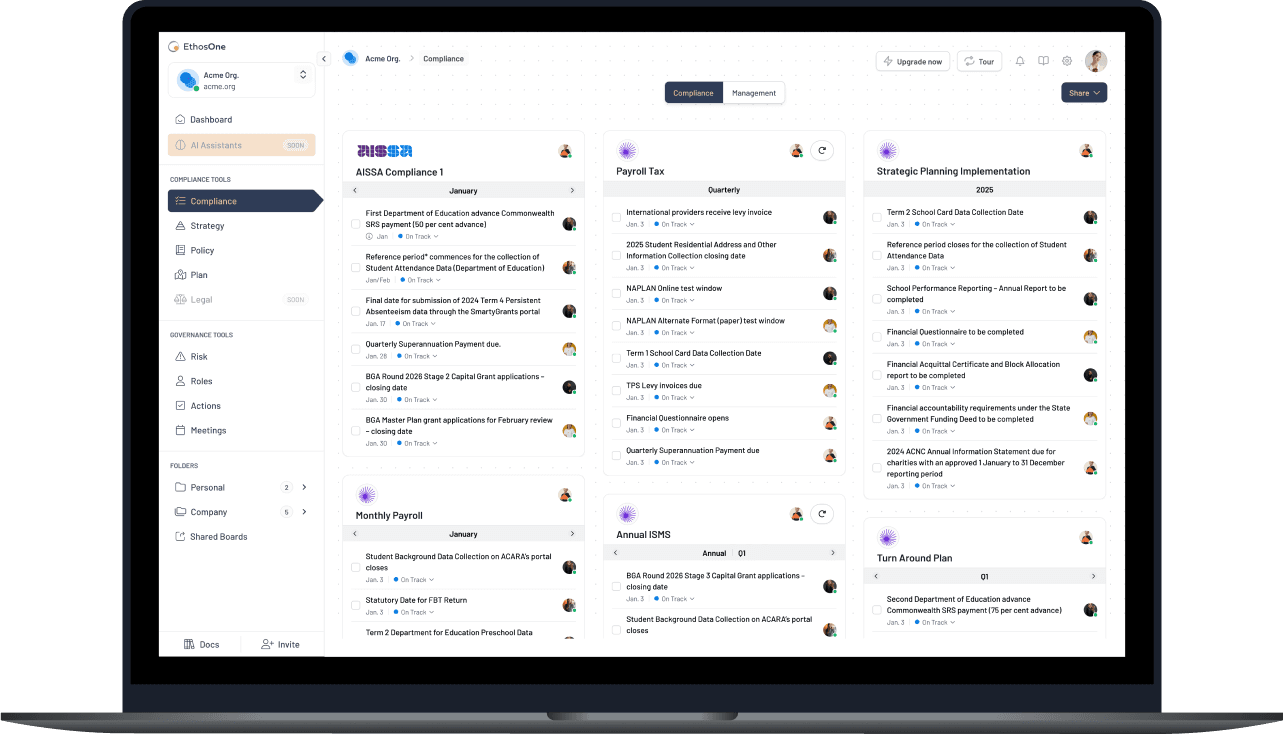
Obligations as a lifecycle 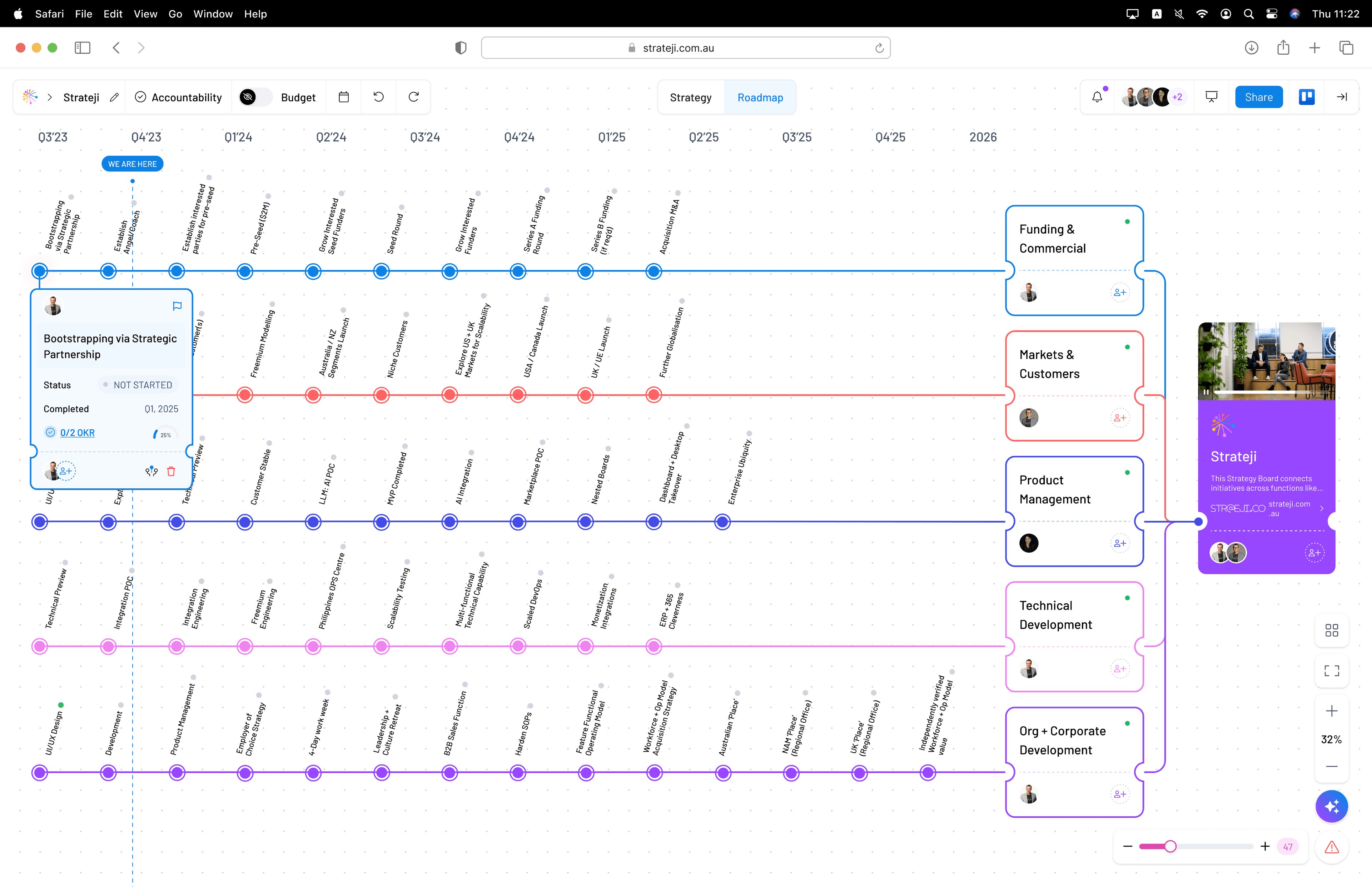
Timeline across the year 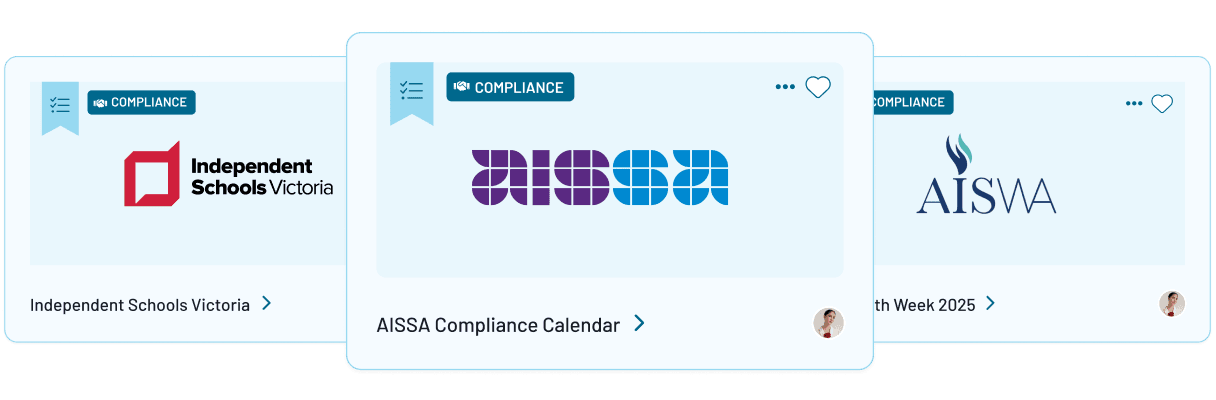
State calendars, ready to use 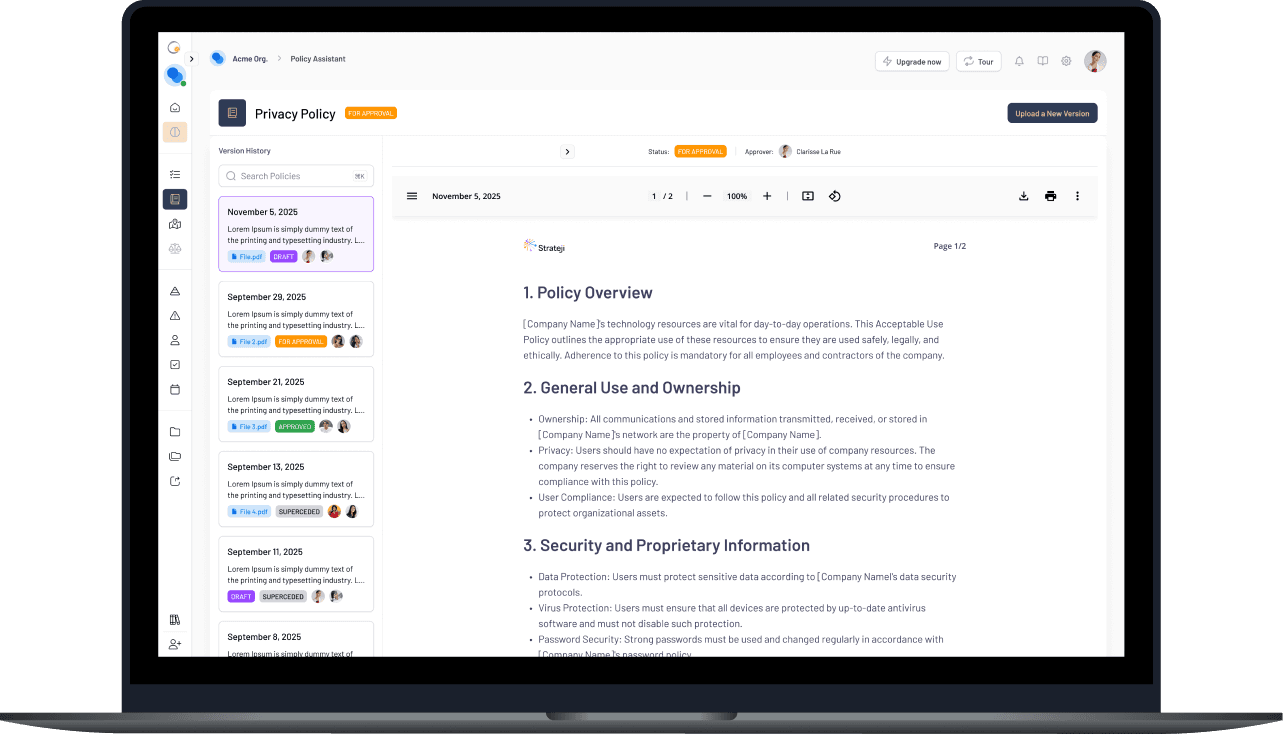
Policies held against obligations 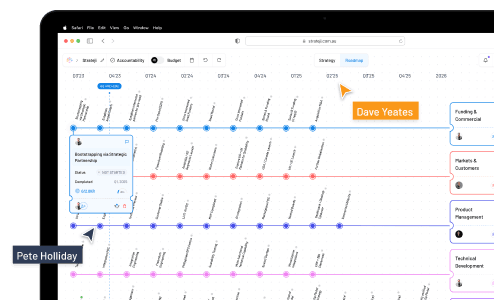
Owned by name, not by team
Go deeper
Read the thinking behind Assure
- AssureArticle
Assurance that serves three audiences at once
One surface, three scopes: Department, Council, parents.
Read more
- AssureArticle
Proof of execution, not proof of intent
Why filed policies are not the same thing as assurance.
Read more
- AssureArticle
Closing the loops: assurance from the admin desk
The Business Manager view of the assurance rail.
Read more
The wedge promise
A live compliance calendar for your site. Fourteen days.
No rebuild of your compliance library. Scope to what's due this cycle, first.
Day
Day 1
Governance Review with your current obligations.
Day
Week 1
State calendar scoped and loaded.
Day
Week 2
Role ownership and evidence paths configured.
Day
Day 14
Your assurance rail is live.