Improve
Improve the site in cycles. Stop losing the thread between terms.
Improvement is the work schools already do: SIP review, term planning, policy revision, project delivery, corridor conversations that should have become actions. The tools break on the chain between them. Improve holds the five things a site does to get better, from priority to project to policy, so a decision in Week 2 is still a visible action in Week 10.
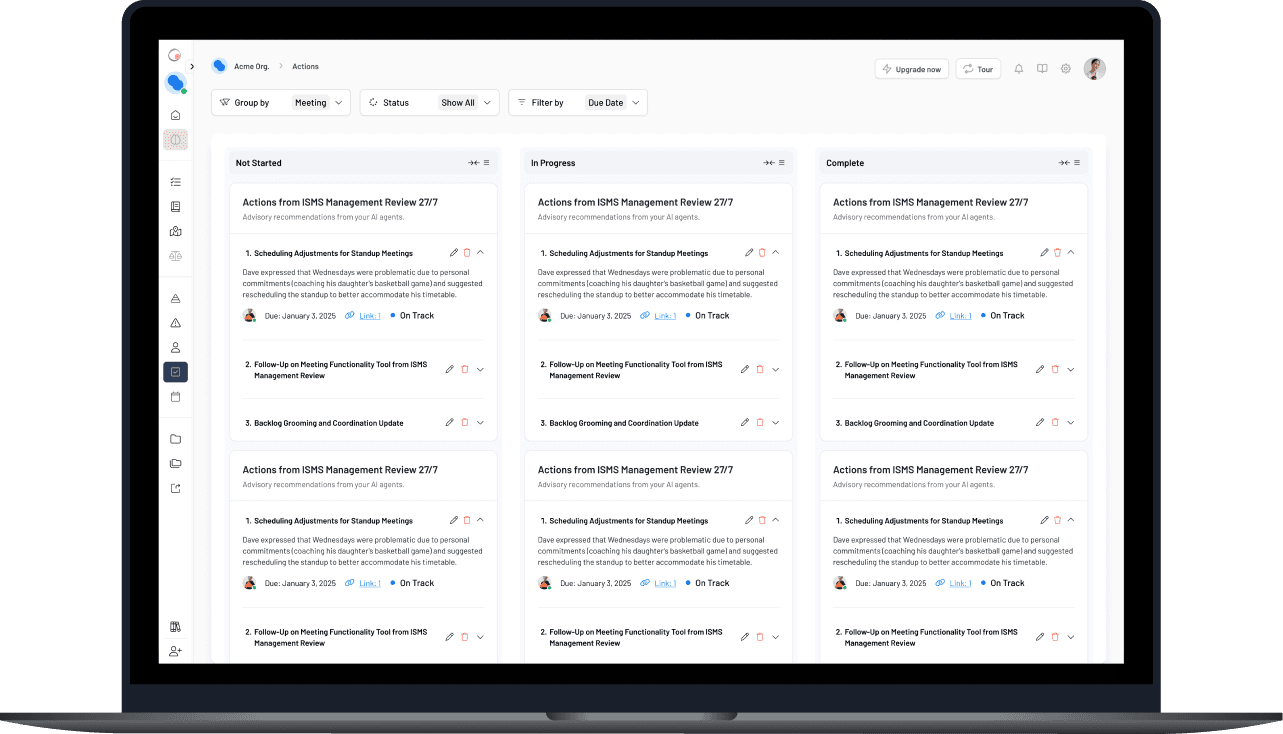
A decision in Week 2 is still a visible action in Week 10.
Promise 1 of 3
Cycles that reset at every term break. Actions that live in four notebooks. Policies that no one uses.
The Invisible Labour research documented 298 critical incidents in a single cohort. Most were reviewed verbally, in a corridor, never written back into the risk register, the policy, the training plan or the next cycle. That is not a policy problem. It is a chain problem. The sector has plans, but no operating rhythm that carries them across terms, across leaders, across staff changes.
Promise 2 of 3
Five capabilities. One improvement layer. The cycle holds across terms.
Improve is organised around the five things a site actually does when it improves: it sets and runs a Site Improvement Plan, it decomposes the plan into planning and KPIs, it authors and revises policies, it delivers projects, and it catches the corridor signal on the whiteboard before it is lost. Each capability below is a working artefact inside Improve, anchored in SA DfE's School Improvement Planning framework, OKR practice, and the product documentation for policies, schedules and the whiteboard.
Promise 3 of 3
Improve is live at a site in 30 days.
Day 1: scoping call and baseline cycle review.
Research anchor
Improvement cycles that carry through are rare not because schools lack ambition. They are rare because there is no rail that holds the priority from leadership meeting to Friday action to end-of-term outcome.
What Improve changes
From plan-on-paper to cycle-in-motion.
- Site Improvement Plan held as live priorities
- 1 SIP
- Priority, objective, key result, linked end-to-end
- 3 tiers
- From first call to your cycle rhythm in EthosGov
- 30 days
Not a document filed after planning day. A rail the term reads from.
Every KR is owned. Every action links back up to the priority it serves.
Bring your last three improvement cycles. Leave with the next one held.
Cycles that reset at every term break. Actions that live in four notebooks. Policies that no one uses.
The Invisible Labour research documented 298 critical incidents in a single cohort. Most were reviewed verbally, in a corridor, never written back into the risk register, the policy, the training plan or the next cycle. That is not a policy problem. It is a chain problem. The sector has plans, but no operating rhythm that carries them across terms, across leaders, across staff changes.
Improve holds the chain. School Improvement Plan in-tool, planning and KPIs decomposed from priority, policies run as a lifecycle, projects delivered on a timeline, and the whiteboard that captures what's really happening. All of it feeds one operating rhythm instead of four parallel tools.
- SIP sits in a PDF no one opens after planning day.
- Term KPIs are tracked in one spreadsheet, reported from another.
- Policies are approved, filed, then never updated when practice changes.
- Projects run on separate Gantts that never touch the SIP.
The Shift
When SIP, planning, policies, projects and the whiteboard share one chain, improvement stops being something a new Principal has to rebuild from scratch.
Five capabilities. One improvement layer. The cycle holds across terms.
Improve is organised around the five things a site actually does when it improves: it sets and runs a Site Improvement Plan, it decomposes the plan into planning and KPIs, it authors and revises policies, it delivers projects, and it catches the corridor signal on the whiteboard before it is lost. Each capability below is a working artefact inside Improve, anchored in SA DfE's School Improvement Planning framework, OKR practice, and the product documentation for policies, schedules and the whiteboard.
School Improvement Plan
A Site Improvement Plan the site actually lives in, not a planning-day PDF.
Aligned to the SA Department for Education School Improvement Planning framework. SIP captures two or three annual priorities, each grounded in site evidence, each decomposed into measurable goals and owned actions. The plan lives alongside the work: when a priority moves, the term plan sees it; when the term plan moves, the Council pack sees it. Planning day stops being the only day the SIP is read.
Priority 1. Literacy growth, Year 3 to 6.
Grounded in NAPLAN growth data, internal assessments and cohort trend.
Measure: Band 5 reading growth +12% by end of Year.
Priority 2. Student wellbeing and belonging.
Grounded in wellbeing survey, attendance pattern and incident trend.
Measure: Belonging index +8%, chronic absence −5%.
Priority 3. Staff capability.
Grounded in coaching cycle completion and staff retention data.
Measure: 10 coaching cycles per staff, 90% retention.
Aligned to the SA DfE SIP framework. Same structure, held live, with the term plan, the policy register and the action board all reading from the same priorities.
Planning and KPIs
Priorities × terms. Every KR has an owner. Every cell has a signal.
OKR practice, applied to a school site. A priority is not meaningful unless it lands in a term, against a measure, with an owner. Planning and KPIs is the matrix view: priorities running down, terms running across, each cell carrying the Key Result and its current position (green, amber, red). The Principal sees the whole year at a glance. The Deputy sees the term they are running. Council sees progress without a re-typed summary.
Term cycle
OKR-style planning, anchored to term cadence. Each cell drills to the owner, the measure and the evidence, not to a PDF of the plan.
Policies
Policies held as a lifecycle: draft, consult, approve, adopt, review.
From the policies product doc. The sector buys policy libraries and wonders why nothing changes at the site. The library is not the problem. The lifecycle is. A policy that is approved but not adopted is worse than no policy. It creates liability without practice. Improve runs policies as a named lifecycle: a draft is written, consultation happens, Council approves, the site adopts, the review is scheduled. A policy that is overdue for review is visible before the audit finds it.
Draft
Authored at the site or adopted from the Department. Linked to the priority it serves.
Consulted
Staff, Council, community consultation as required. Feedback captured in-line.
Approved
Council minute captures the approval. Approval flows to the policy register.
Adopted
Linked to training, procedures and the action register. The policy is in use, not just filed.
CurrentReview
Cadence-based review. Changes write back to risk, training plan and next SIP cycle.
Grounded in product doc 09-policies.md. A policy that never reaches Stage 04 is a liability, not a control, and Improve makes that visible on the lifecycle.
Projects
Projects that serve the priorities, not side initiatives on a separate Gantt.
From the schedules product doc. A site runs dozens of projects a year: literacy intervention, building works, subject review, wellbeing programme, IT rollout. The sector runs them on separate Gantts that never touch the SIP. Improve holds projects on a cadence-aligned timeline: every project is linked to a priority, every deliverable has an owner and a measure, every milestone auto-feeds the Council pack and the Department roll-up. A project that drifts is visible before the term break.
Whiteboard
The corridor signal, captured before it disappears, then promoted into the chain that matters.
From the whiteboard product doc. The most valuable improvement signal in a school site is not the formal review. It is the observation from a teacher on Tuesday, the parent comment after drop-off, the incident note the Deputy made on the way to lunch. The sector loses this signal every week. Whiteboard is the theme-grouped capture surface that holds those observations and, critically, lets the Principal promote a card into the chain: a risk, a project, a policy change, a KPI, an action. Nothing stays on the whiteboard. Everything it catches ends up somewhere it belongs.
Two repeat near-misses on the east yard crossing at pickup.
Fire drill. Year 2 evacuation route blocked by new hoarding.
Year 5 team asking for a shared planning day on maths.
Pattern: intervention group showing consistent growth against control.
Parent raised lunchtime loneliness for Year 1 transfers.
Need a plain-English update to the enrolment policy. Three families misread it.
Local service club offering a reading volunteer programme.
Grounded in product doc 20-whiteboard.md. The whiteboard is not a backlog. It is the front door where real site signal enters, and where the Principal decides where it belongs next.
Why existing tools cannot hold improvement rhythm across terms.
| Capability | Shared Drive and Notebooks | Student Management Systems | Independent-School Product | Generic Action Trackers |  |
|---|---|---|---|---|---|
| SIP lived in, not stored | No | No | Partial | No | Yes |
| Priority → term KR → action chain | Manual | No | Partial | Partial | Yes |
| Policy lifecycle with draft → adopt → review | No | No | Sometimes | No | Yes |
| Projects linked to SIP priorities | No | No | No | Partial | Yes |
| Corridor signal captured and promoted | Lost in notebooks | No | No | No | Yes |
| Director visibility into improvement cycles | No | No | Not applicable | No | Yes |
Improve is not a plan document, a task board or a minutes tool. It is the chain that carries a decision through to an outcome across terms, and makes the learning from every observation available to the next cycle.
Frequently asked
Frequently asked questions
Improve supports role-based execution across the site and system.
Who we help

Principals
The improvement rhythm you already run, finally held by the tool instead of by your memory.

Deputy Principals
The action register the role has been maintaining in a notebook, now one shared source across every forum.

Governing Councils
Oversight that sees decisions carry through to outcomes, not just decisions made.

Education Directors
Improvement cycles visible across the portfolio, not just reported once a term.
Why EthosGov
TrustWhy the sector should trust Improve.
Aligned to the SA Department for Education School Improvement Planning framework and term-based planning cadence. That is the rhythm the sector actually runs on.
Built on the Invisible Labour evidence base: 298 documented critical incidents across a single cohort, most reviewed verbally and never written back. Improve is the first category layer designed to close that chain.
ISO 27001 aligned, Australian hosted, WCAG 2.1 AA, procurement-ready with role-based access by design.
Frequently asked questions
What is public school improvement software?
It is a structured layer that keeps plans, priorities, policies, projects and corridor signal connected and reviewable across terms.
Does Improve replace our SIP?
No. It operationalises your SIP by turning it into a live working system with owned KRs, linked policies and tracked projects.
Can we run policy review inside Improve?
Yes. Policies are held as a lifecycle (draft, consult, approve, adopt, review), linked to the priorities and risks they serve.
We already have an improvement plan.
Improve does not replace the plan. It is where the plan is executed and held across terms, so Week 10 still reads Week 2.
We already track actions in minutes.
The issue is not action capture. It is action continuity to closure and outcome evidence, and the promotion logic that turns an observation into a project, risk, policy or KPI.
Is this another tracker on top of trackers?
No. Improve is designed to become the single improvement register, with SIP, planning, policies, projects and the whiteboard reading from the same priorities.

Inside Improve
The improvement rail, in the product.
These are the surfaces Improvement actually runs on, not a marketing deck.
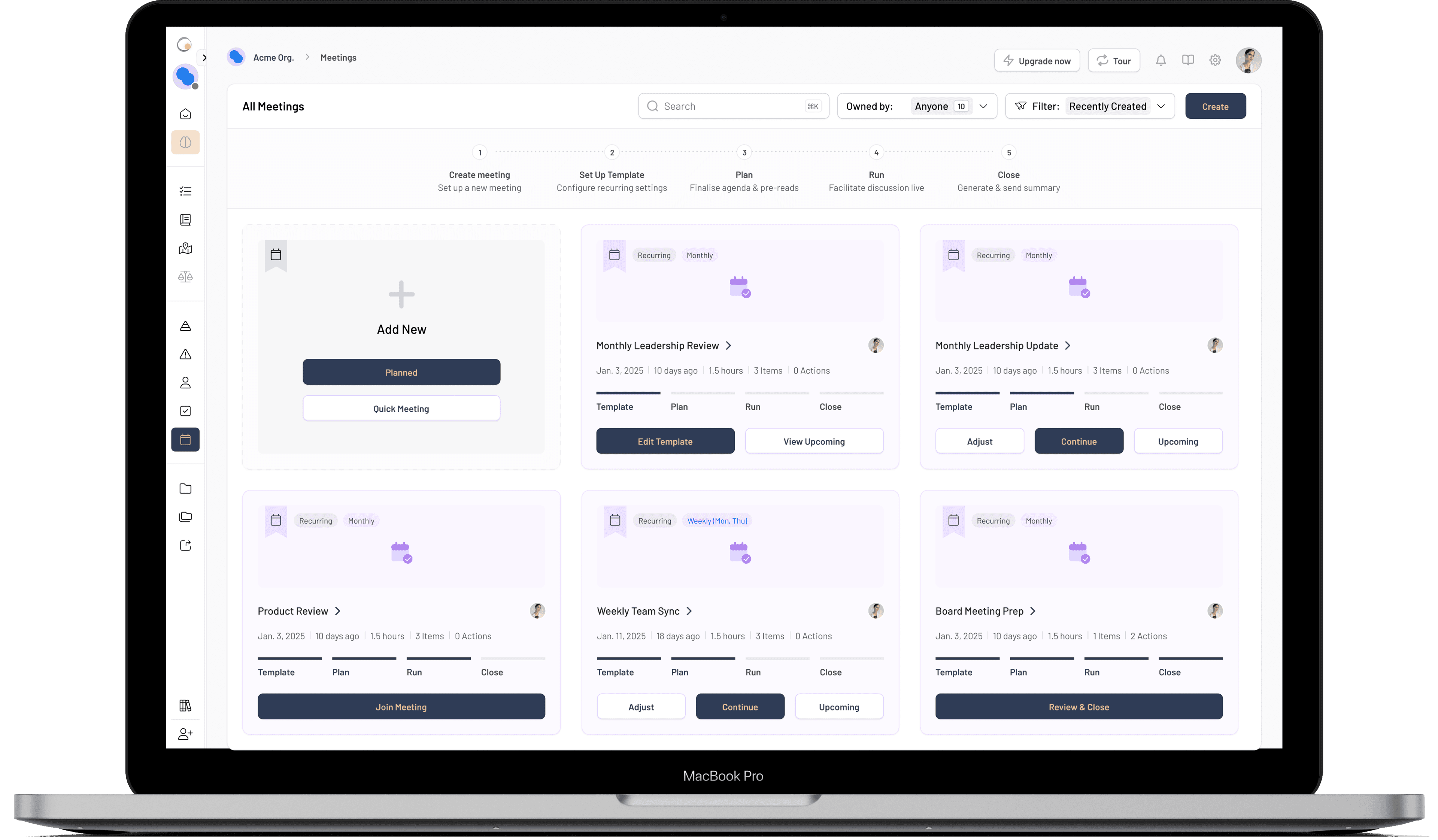
Priorities held as a pyramid 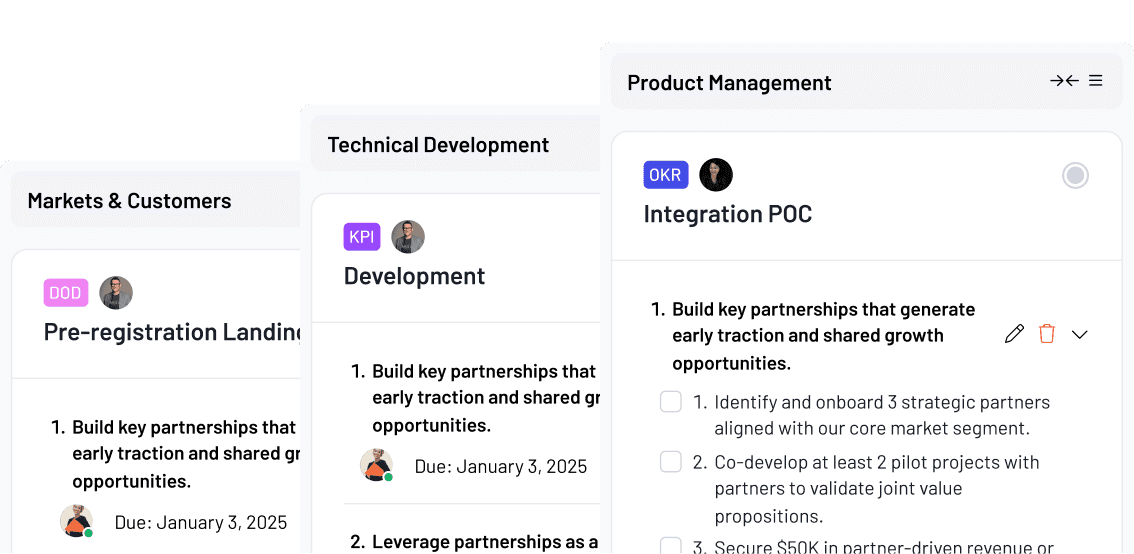
Roadmap to outcome 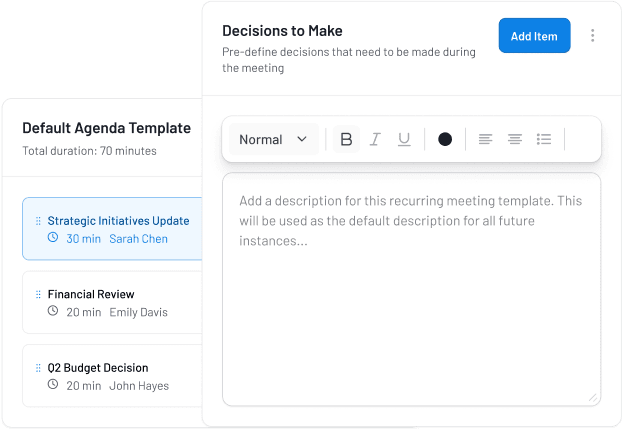
Decisions in the meeting 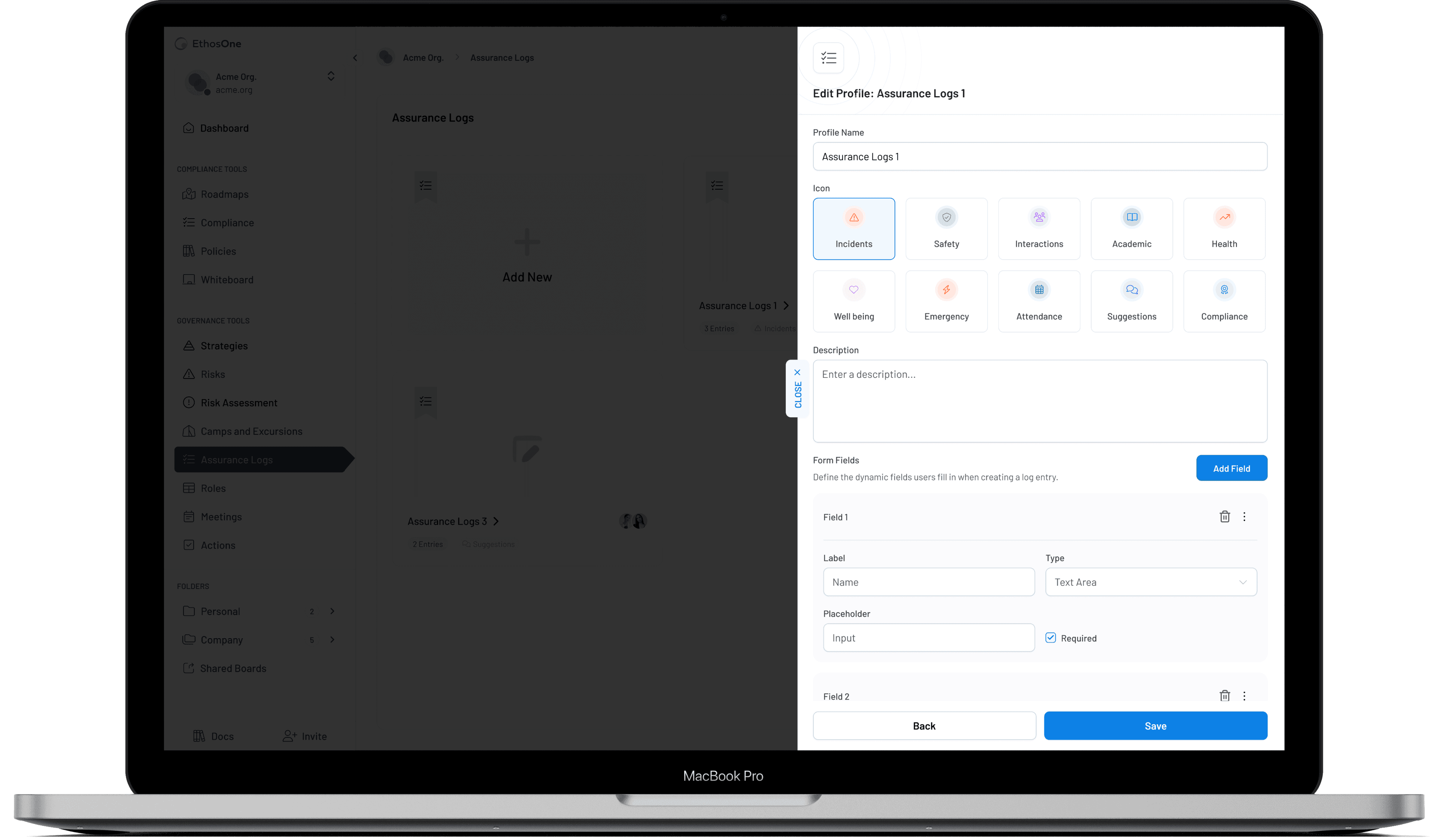
Coaching linked to priority 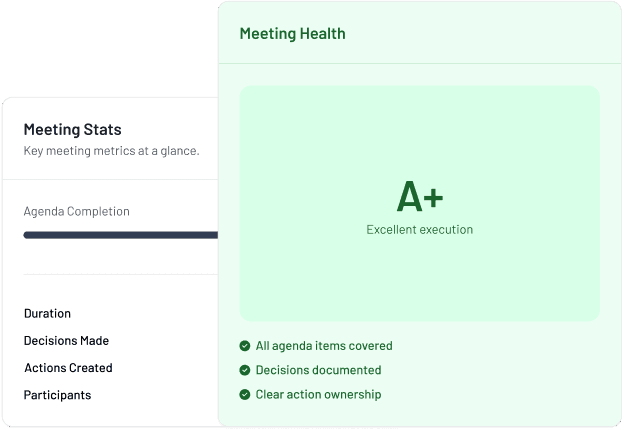
Cycle health at a glance
Go deeper
Read the thinking behind Improve
- ImproveArticle
Improvement cycles that carry through
Why most SIPs stall after Week 3 and what the rail needs to hold.
Read more
- ImproveArticle
Coaching improvement at portfolio scale
How the rail reaches across twenty-five schools without twenty-five rebuilds.
Read more
- LeadArticle
Lead with less friction: the design principle
The design principle that threads Lead and Improve together.
Read more
The wedge promise
A post-incident review cycle, held end-to-end. Thirty days.
Start with one cycle. Keep it if it works.
Day
Day 1
Governance Review with your last three cycles.
Day
Week 2
SIP loaded as priorities, KRs, actions.
Day
Week 3
Coaching cadence and meeting templates live.
Day
Day 30
Next improvement cycle runs in EthosGov.